
The "Lucky in Love" Casserole That’s a Collector's Holy Grail
If you spot a white Pyrex dish covered in green four-leaf clovers and tiny pink hearts, don't let it go at a garage sale for five dollars. This 1959 promotional piece is allegedly one of the rarest patterns ever produced, as it was reportedly a limited test run that never saw full distribution. Collectors have been known to pay upwards of $6,000 for a single dish in mint condition.
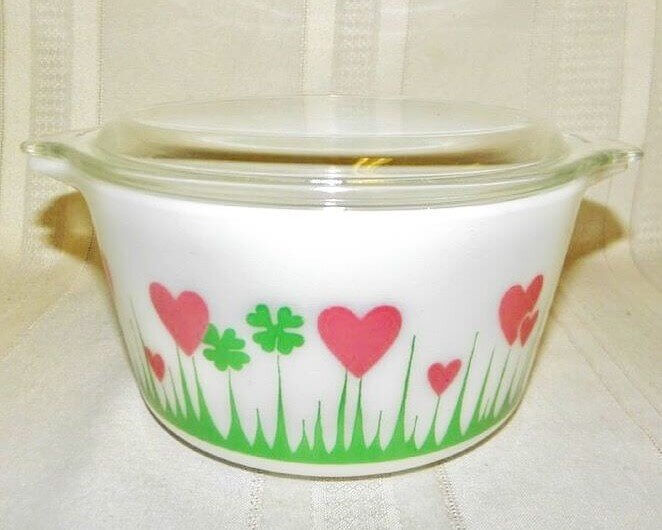
Because the grass and heart decals were prone to fading, finding a vibrant, glossy version is like winning the lottery of the kitchenware world.
The "Pink Daisy" Beauty That Defined Mid-Century Style
Released in 1956, the Pink Daisy pattern was Pyrex’s very first printed design on an opal glass base. It features delicate white daisies scattered across a gorgeous pastel pink background, and it instantly became a staple in 1950s homes. Today, a complete set of these nesting space-saver casseroles can fetch several hundred dollars. Collectors especially hunt for the ones with their original clear glass lids intact.
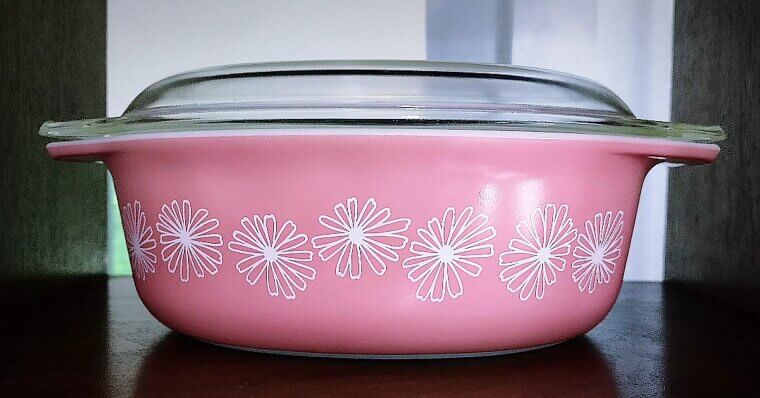
It’s a quintessential "Grandma’s kitchen" piece that has transitioned from a daily workhorse to a prized display item for retro enthusiasts everywhere.
The Turquoise "Butterprint" Set Every Farmhouse Needs
Commonly referred to as the "Amish" pattern, Butterprint features a charming turquoise-on-white scene of a farming couple surrounded by roosters and stalks of corn. Produced between 1957 and 1968, it was incredibly popular during the mid-century era. While individual bowls are fairly easy to find, a full set of four Cinderella nesting bowls—the ones with the specialized pouring spouts—can sell for over $400 today.
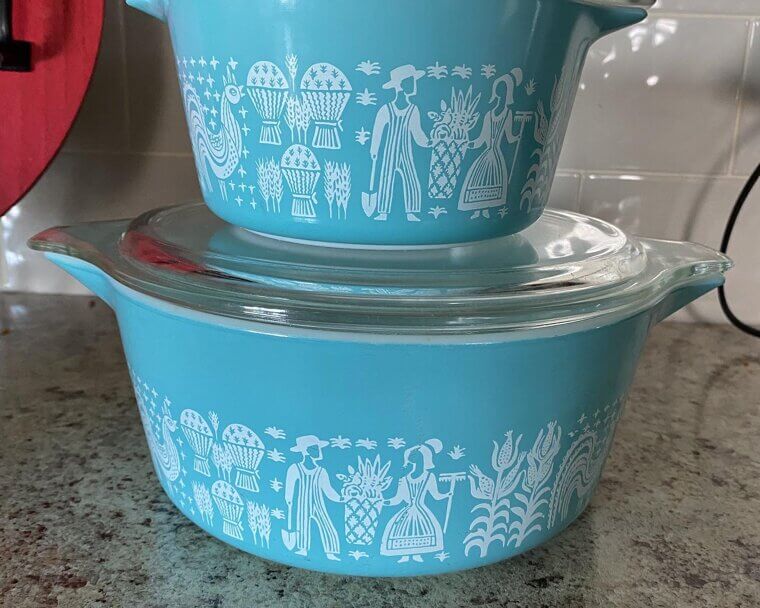
The turquoise color is particularly desirable, though rare orange or pink versions of this pattern are reportedly worth even more due to their extreme scarcity.
The "Gooseberry" Pattern in Prized Pink and White
Gooseberry is one of those patterns that feels like a warm hug from the 1960s. It features a whimsical trailing vine of berries and leaves, most commonly seen in a pink-on-white or white-on-pink color scheme. Because these were often used daily, many pieces suffered from "dishwasher haze," which dulls the finish. If you have a set that still has its original high-gloss shine, you’re looking at a significant investment.
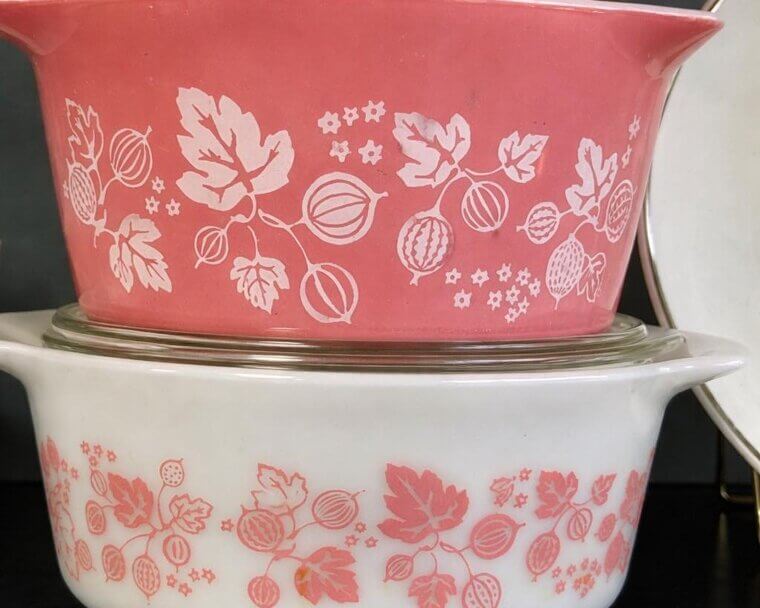
A full four-piece nesting set in excellent condition is currently valued at $500 or more by serious Pyrex aficionados.
The Rare "Atomic Eyes" Mixing Bowl for Modernists
If your style leans more toward "Mad Men" than country farmhouse, the Atomic Eyes pattern is likely your favorite. This design features turquoise and gold stylized eye shapes that scream 1950s Futurism. Unlike many other patterns that were produced for a decade, Atomic Eyes had a shorter run, making it much harder to find today. A single mixing bowl in this pattern can easily command $600 at auction.
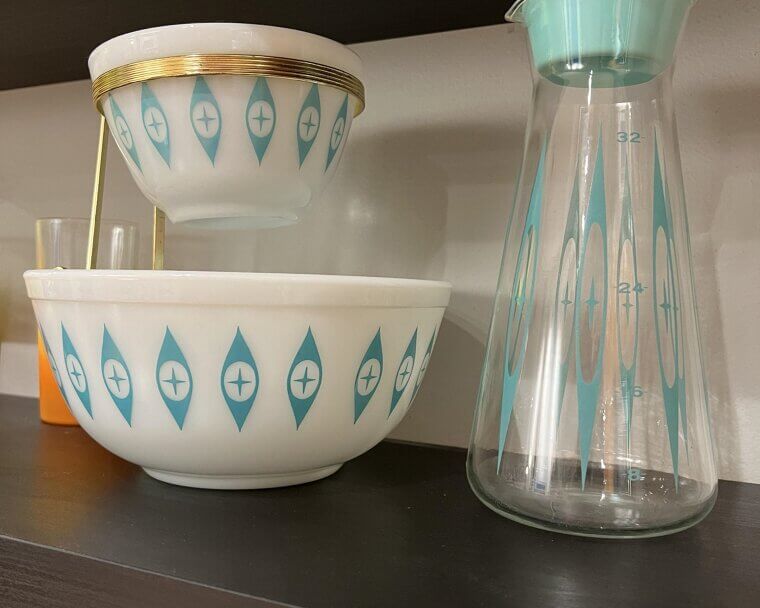
It’s a perfect example of how "kitchen junk" can actually be a masterpiece of mid-century modern graphic design.
The "Blue Cornflower" CorningWare Classic You Likely Own
We’ve all seen the white square dishes with the three little blue flowers on the side. This was the debut pattern for CorningWare in 1958 and remained in production for decades. While common pieces aren’t worth a fortune, rare "P-series" items or complete sets with original detachable handles are gaining value. Specifically, the early versions with small, sloped handles are more sought after than the later 1970s versions.
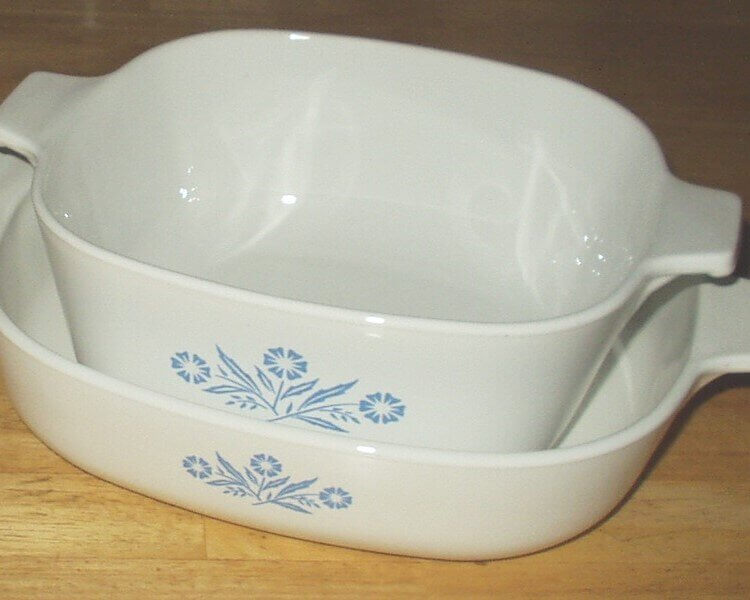
While it might not buy you a new car, a pristine collection can still bring in a tidy sum from nostalgic buyers.
The "Fire-King Jadeite" Restaurant Ware That Shines Green
There is something undeniably soothing about the milky-green glow of Jadeite glass. Originally produced by Anchor Hocking under the Fire-King brand, this durable glassware was often used in 1940s diners because it was so tough. Today, those heavy "C-handle" mugs and "Jane Ray" ribbed plates are highly collectible. A single rare batter bowl or a set of heavy nesting bowls in the signature Jade-ite green can sell for $200 to $400.
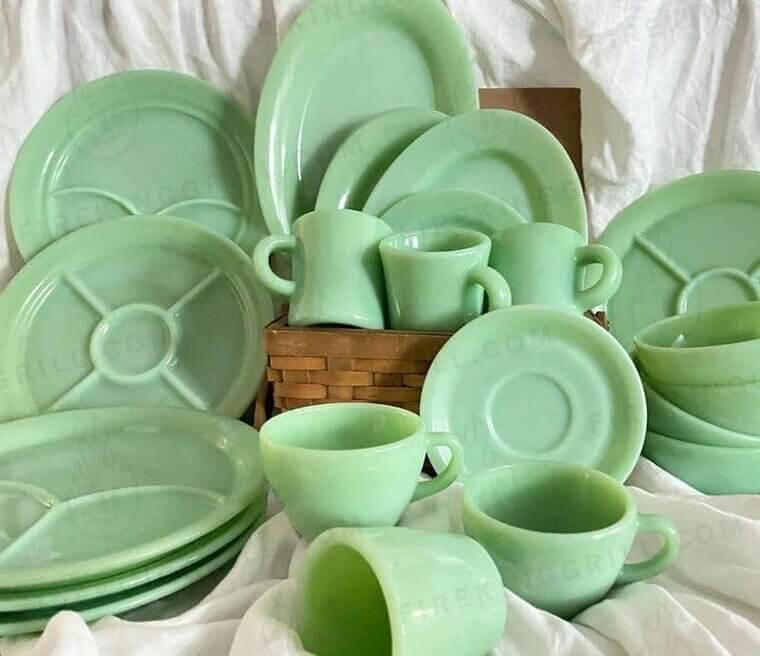
It’s the ultimate "shabby chic" treasure that looks just as good on a shelf as it does on a table.
The "Sparkling Starburst" Casserole for a Space-Age Kitchen
Produced for only a few years starting in 1960, the Starburst pattern is a promotional Pyrex piece that looks like a snapshot of the Space Age. It features black and silver-toned stars on a white background, often accompanied by a silver-plated cradle and a candle warmer. Because the metallic paint was very delicate, many of these dishes have lost their "sparkle" over time. Finding one with crisp, un-scratched stars is rare.
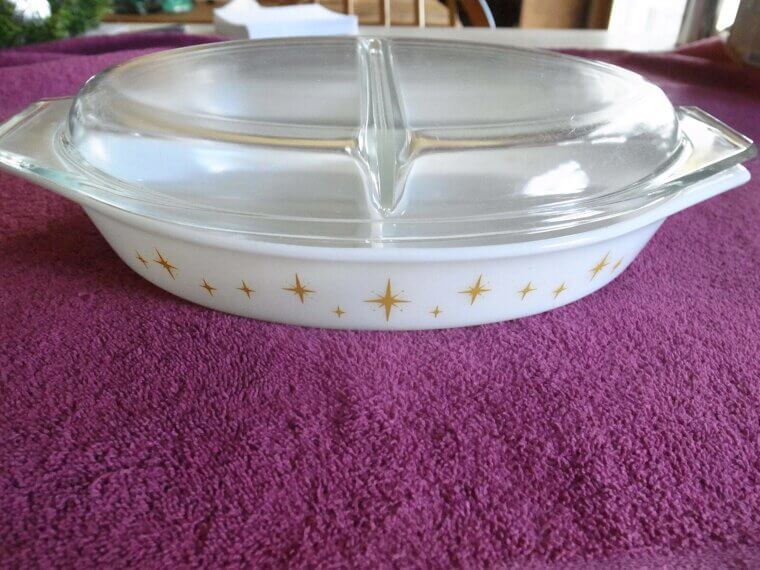
These sets reportedly sell for $400 to $600, especially if they still have the original box and accessories.
The "Rainbow Stripes" Set That Brightens Any Cupboard
In the mid-1960s, Pyrex moved away from floral prints and introduced the bold, clean lines of the Rainbow Stripes nesting bowls. The set included four bowls in varying colors: pink, sandalwood, blue, and a rare yellow. Finding all four together is a challenge because families often broke or lost one over the decades. A complete set with vibrant, unfaded stripes is a high-priority item for collectors, often selling for $300 or more.
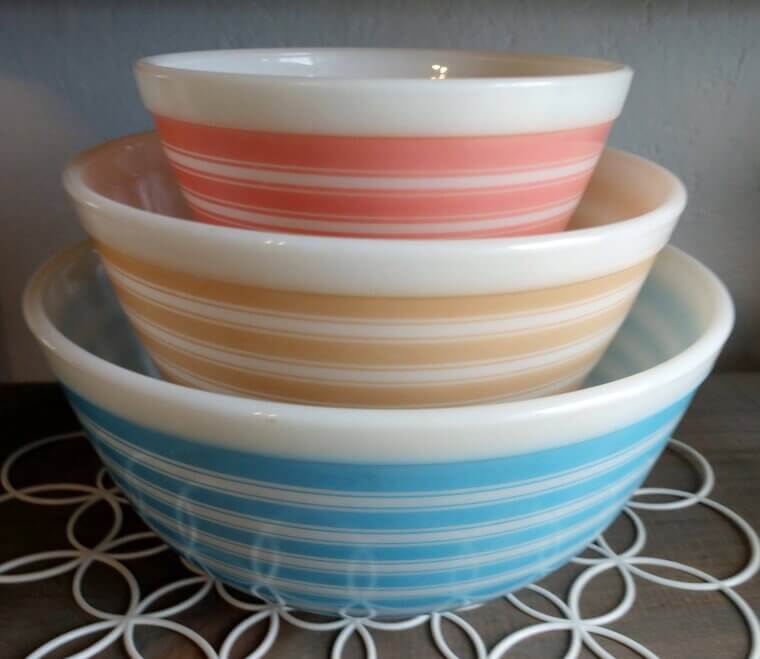
The pink bowl is usually the most coveted of the bunch due to its popularity in retro decor.
The "Friendship" Bird Pattern That Spreads Cheer
If you have a dish decorated with bright red birds and orange flowers, you’ve found the "Friendship" pattern. Released in 1971, this cheerful design was a massive hit and remains a fan favorite for its "Boho" 70s vibe. The most valuable pieces are the large Cinderella bowls and the patterned lids, which are often missing from secondhand sets. Collectors are currently paying around $350 for a full set of nesting bowls.
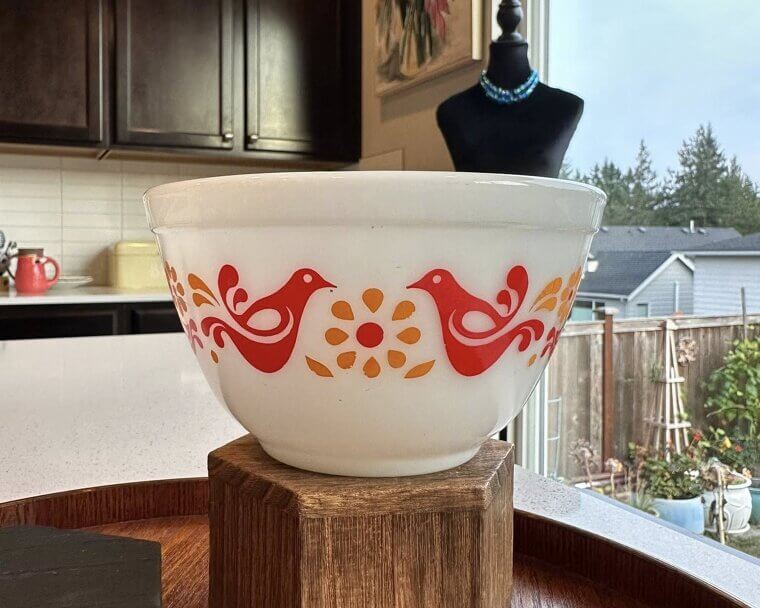
It’s a wonderful example of how the bold colors of the 70s are making a huge comeback in modern interior design.
The "New Dot" Mixing Bowls That Collectors Spot Instantly
Introduced in 1967, the New Dot pattern is the epitome of pop-art cool. The set features large, vibrant polka dots in orange, blue, green, and a rare yellow. Because these were produced for a relatively short period, finding a complete set without significant "flea bites" (tiny chips in the paint) is a major win. A full set of four nesting bowls in pristine condition can reportedly sell for $400 to $600.
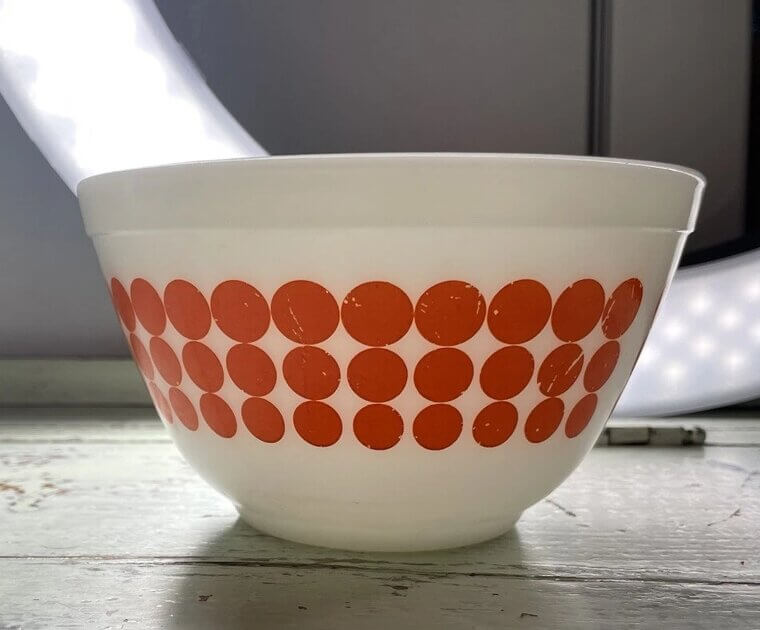
Collectors love them because they add an immediate splash of retro color to any modern kitchen, making them highly desirable for display.
The "Snowflake Garland" Blue and White Beauty
Released in 1972, Snowflake Garland features a delicate white winter-themed pattern on a deep turquoise-blue background. It’s often confused with the earlier "Snowflake" pattern, but the "garland" version is distinctive for its continuous floral-like chain. While individual pieces are common, the large 4-quart mixing bowls and the "refrigerator dish" sets are gaining significant value. A complete set of four nesting bowls can fetch up to $250.
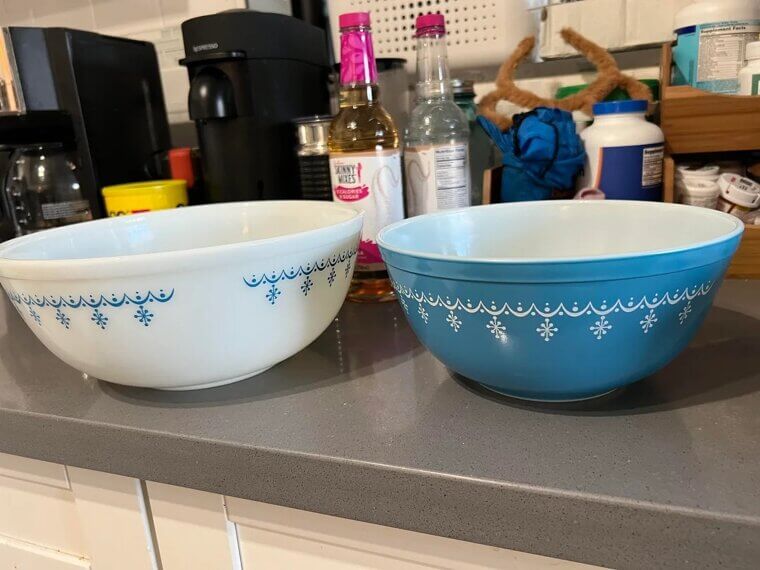
This pattern is particularly loved by those who decorate their kitchens for the holidays, as it bridges the gap between seasonal and year-round style.
The "Early American" Pattern That Celebrates Colonial Kitsch
If you have a brown and gold dish decorated with eagles, lanterns, and coffee grinders, you’ve found the "Early American" line. Released in 1962, it was designed to tap into the era's obsession with colonial history. While the pattern was once considered common, the gold-leaf detailing on the lids is incredibly prone to wearing off in the dishwasher. Finding a "promotional" oval casserole with a perfectly preserved gold-embossed lid is rare.
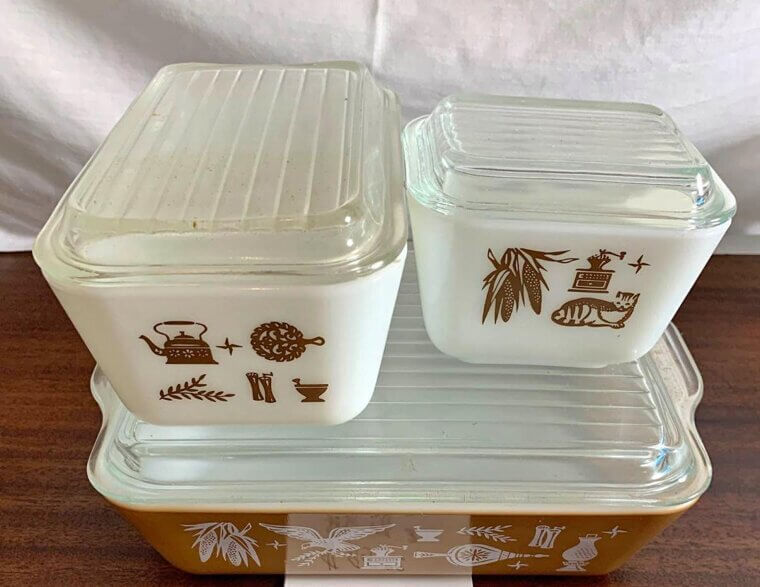
Such pieces, especially in their original boxes, have allegedly sold for over $150, proving that even "dated" styles have their loyal fans.
The "Balloons" Promotional Bowl for Up-And-Away Values
The "Balloons" mixing bowl is a single-piece promotional item from 1958 that is a genuine work of art. It features a whimsical turquoise-on-white scene of hot air balloons floating over a landscape. Because it was only produced for one year, it is quite rare. A single 1.5-quart Cinderella bowl in this pattern can reportedly command $200 to $300 at auction. Its rarity and "cute factor" make it a center-piece for many Pyrex collectors.
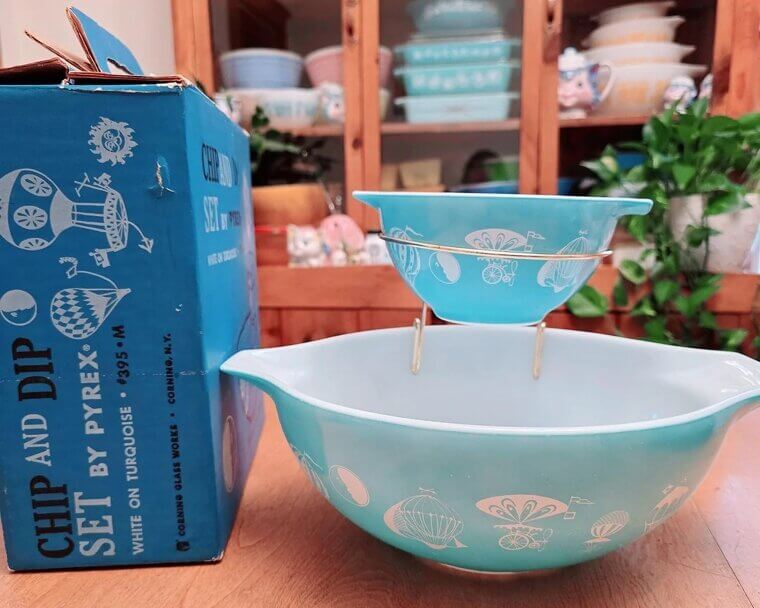
If you find one at a thrift store for a few dollars, you’ve essentially found a diamond in the rough.
The "Dianthus" Pattern With Its Delicate Floral Charm
"Dianthus" is a 1980s pattern that many people overlook, but serious collectors are starting to take notice. It features a soft pink and grey floral design that feels very much like a romantic tea party. Because it was one of the later patterns produced before Pyrex shifted away from these opal glass designs, it wasn't as mass-produced as the 1970s lines. A complete set of nesting bowls or the large, lidded casseroles can sell for $150 or more.
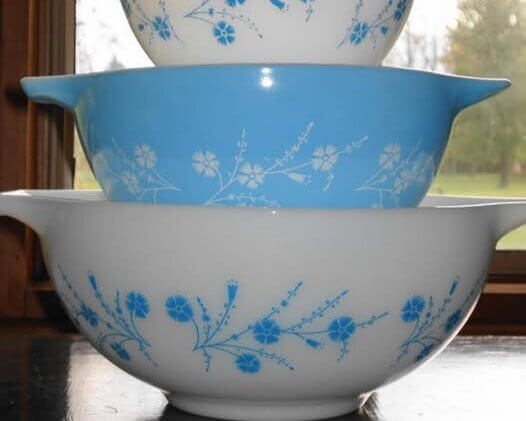
It’s a perfect "entry-level" collectible that is steadily rising in price as 80s nostalgia grows.
The "Zodiac" Casserole for the Astrology Obsessed
Long before astrology was a trendy app on your phone, Pyrex released the "Zodiac" promotional casserole in 1961. This large, round dish features gold-leaf constellations and zodiac symbols on a sleek black background. Finding one with the original brass warming stand is the ultimate goal. Because the gold leaf is extremely fragile, pieces with no fading are highly prized. A mint-condition Zodiac set has reportedly sold for $300 to $400.
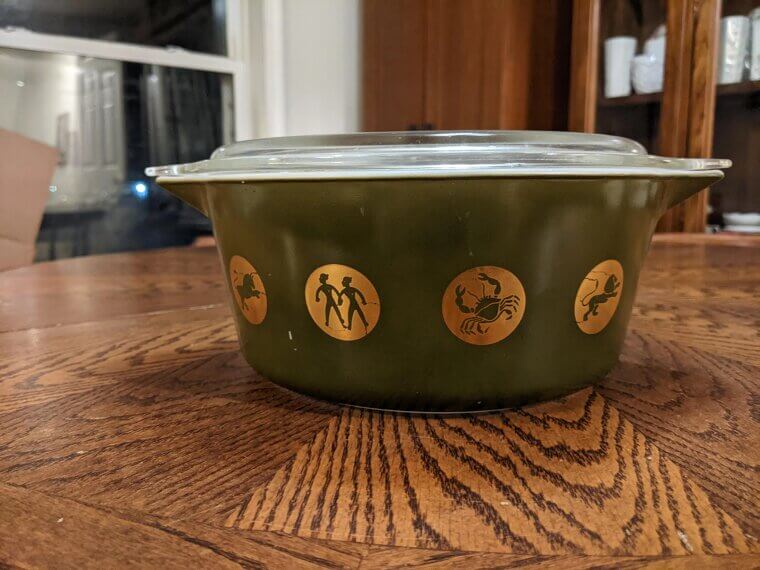
It’s a sophisticated, "grown-up" piece of Pyrex that looks more like a cocktail party accessory than a cooking dish.
The "Terra" Set That Looks Like Mid-Century Pottery
If you find a Pyrex dish that feels matte and textured rather than glossy, you might have found "Terra." Released in 1964, this pattern was designed to look like hand-thrown earthenware, featuring dark brown and burnt orange stripes. It was notoriously easy to scratch, which is why finding "clean" pieces is so difficult today. Collectors are paying a premium for pieces that haven't been marred by silverware marks.
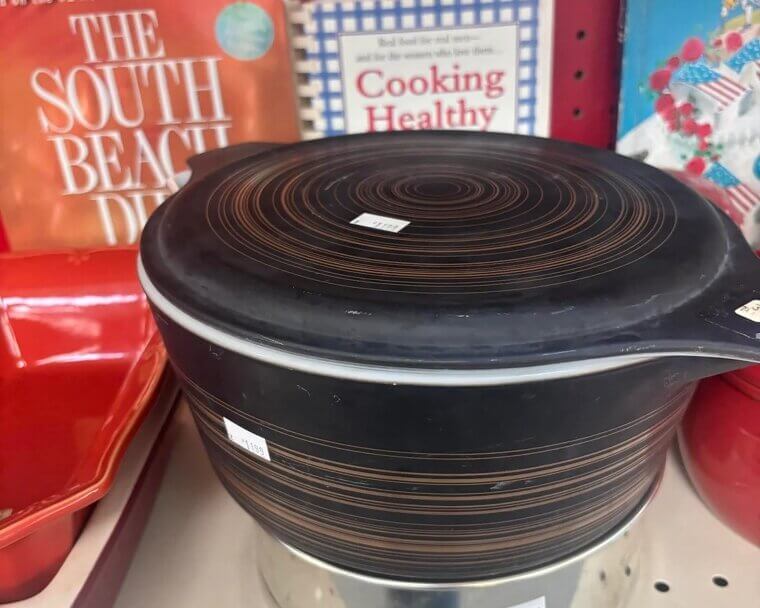
A complete set of these earthy, modern-looking bowls can easily bring in $350, as they fit perfectly with the current "Boho-chic" home decor trends.
The "Griswold #2" Skillet That Outperforms Gold
You might think an old cast-iron skillet is just heavy junk, but if it has a "Griswold" logo on the bottom, think again. Specifically, the tiny #2 skillet is incredibly rare because it wasn't a standard size for most families. While a common #8 skillet might be worth $100, a rare #2 with a "slanted logo" has reportedly sold for over $1,200 on eBay. These pans are legendary among chefs for their smooth, glass-like cooking surface.
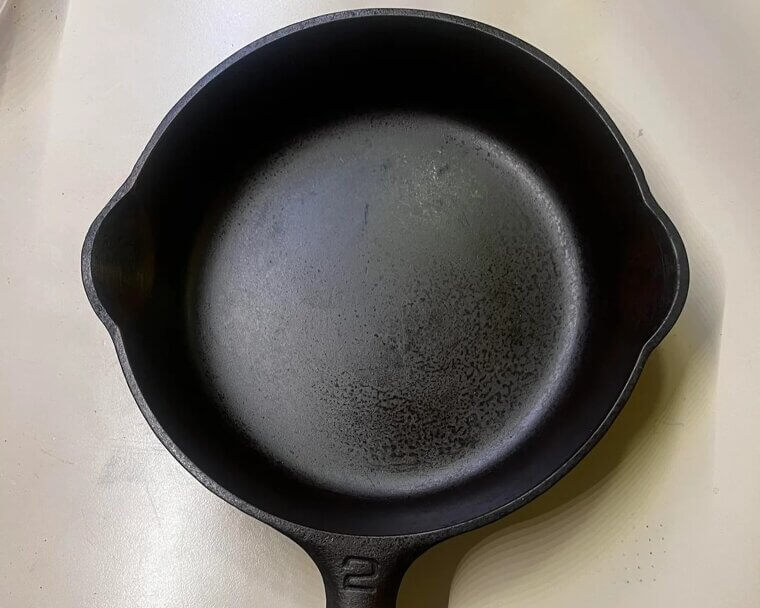
If you’ve inherited a stack of rusty cast iron, clean them off carefully—you might be holding a four-figure treasure.
The "Cathrineholm Lotus" Enamelware From Norway
These bright, cheery enamel pots and bowls featuring the "Lotus" leaf pattern are the darlings of the mid-century modern world. Designed by Grete Prytz Kittelsen, these pieces come in striking colors like avocado green, bright orange, and deep teal. Because enamel is prone to chipping, a pristine "large lotus bowl" is a high-ticket item. A single large bowl in a desirable color can sell for $400 to $600.
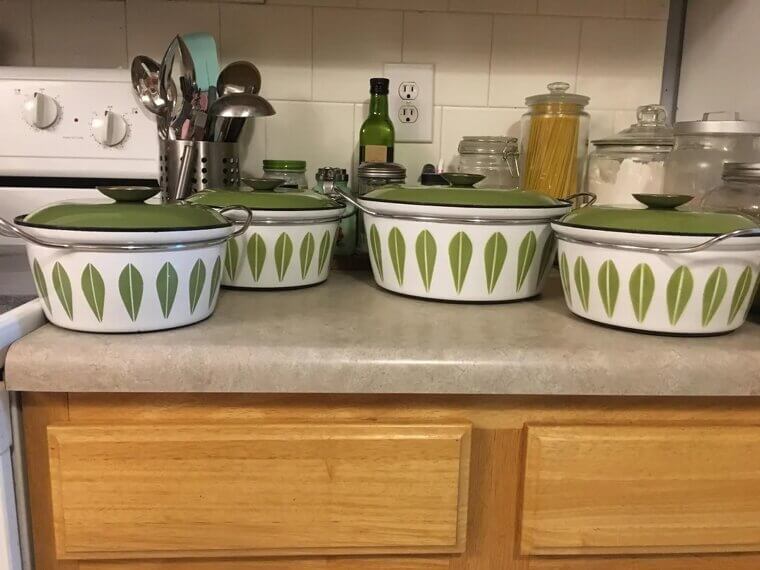
They are iconic symbols of 1960s Scandinavian design and are often the first thing a collector spots across a crowded flea market.
The "Le Creuset Fig" Discontinued Purple Dream
While Le Creuset is still very popular today, certain discontinued colors have become legendary. "Fig," a deep, moody purple with a matte finish, was only available for a short time and has since been retired. Since the brand has a cult-like following, fans who missed out on the initial release are willing to pay double the original retail price for a "Fig" Dutch oven. Pristine pieces have reportedly fetched $600 to $800 on the secondary market.
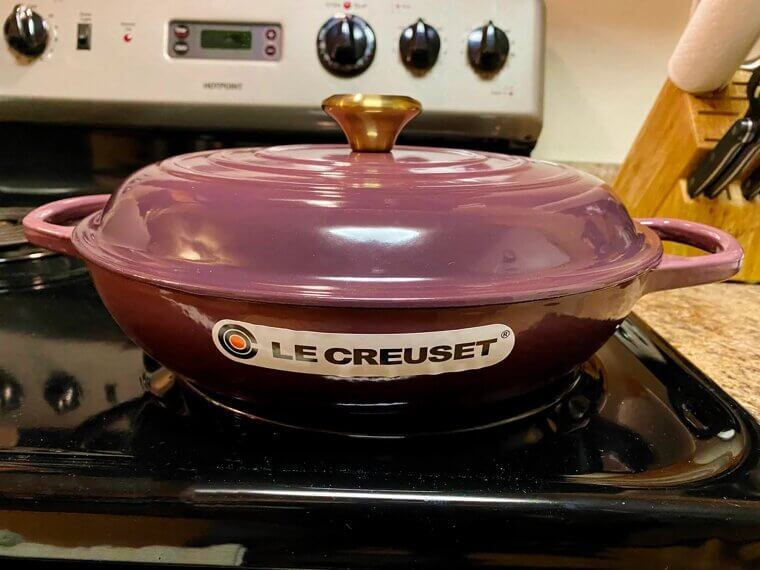
If you have this specific shade of purple sitting in your pantry, you’re basically looking at a designer handbag for your stove.
The "Holt Howard Pixieware" That Makes Everyone Smile
If you find a ceramic condiment jar shaped like a whimsical pixie head with a goofy grin, you’ve found "Pixieware." Produced by Holt Howard in the 1950s, these kitschy jars for mustard, relish, and honey are a collector’s dream. While they look like cheap souvenirs, a rare "Ketchup" or "Mayonnaise" pixie in great condition can sell for $500 to $1,000. Their fragile ceramic "hats" (the lids) are often broken or lost.
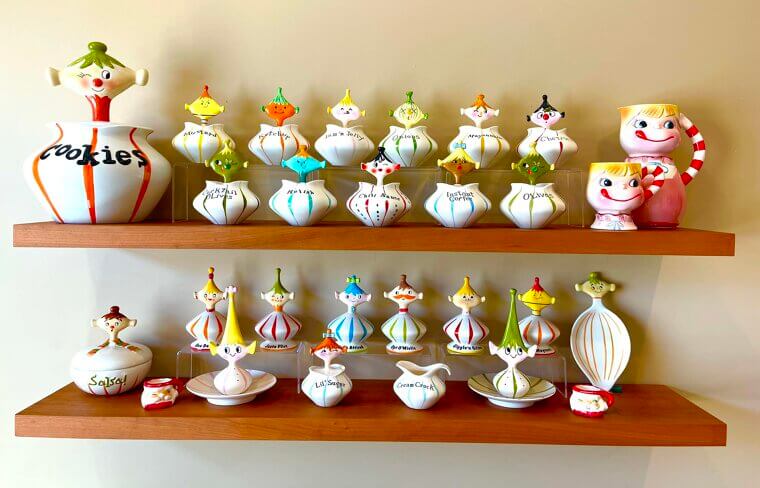
So finding a complete, unchipped set is like finding a needle in a haystack. They are the ultimate "hidden gem" of the kitchen.
The "Turquoise Diamonds" Pyrex That Screams 1950s
Technically known as the "Eyes" or "Turquoise Diamond" pattern, this 1950s classic features a row of blue-green diamonds on a white base. It was a promotional item that didn't see a wide release, making it much harder to find than the floral patterns of the 70s. A single 1.5-quart mixing bowl can easily fetch $400. It is often cited by experts as one of the quintessential patterns for anyone trying to build a serious Pyrex collection.
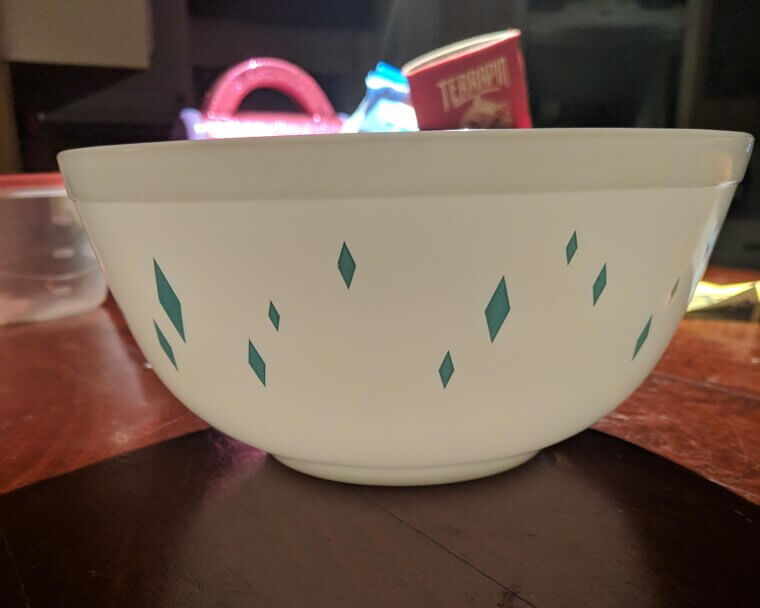
Its minimalist, geometric look is a far cry from "grandma's flowers," appealing to high-end vintage decor enthusiasts.
The "Pink Stems" Promo Dish That’s Rare as a Rose
"Pink Stems" is a legendary promotional casserole from 1962. It features a simple, elegant design of pink flower stems on an opal white background. Because it was likely a limited-time gift or a localized test pattern, it is rarely seen in the wild. When it does appear, collectors go into a frenzy. A single lidded dish in good condition has reportedly been valued at $1,000 or more.
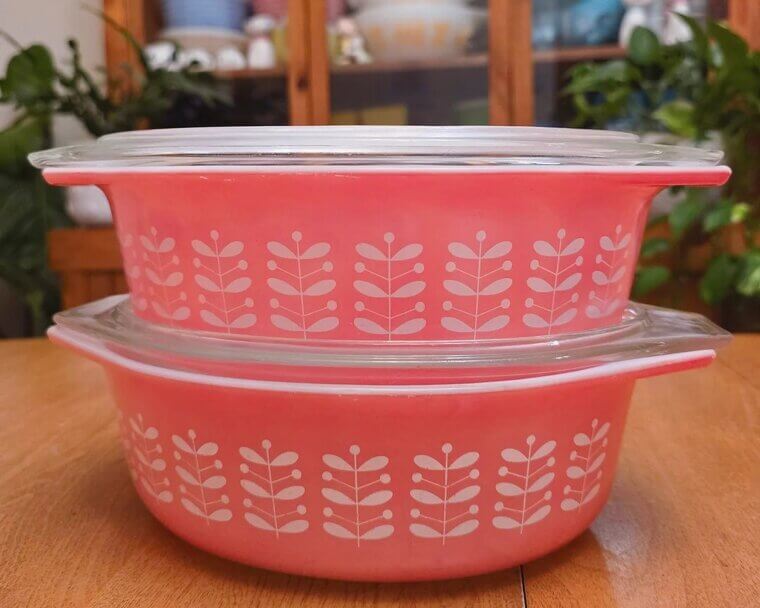
If you ever see this at a thrift store, don’t even check the price—just grab it. It is one of the "crown jewels" of the Pyrex world.
The "Spirograph" Casserole That’s a Geometric Masterpiece
Inspired by the popular drawing toy of the 1960s, the "Spirograph" (or "Medallion") pattern is a 1970 promotional piece. It features a bright orange and red geometric design on a white background. It was only produced for a very short window, and its bold, psychedelic look makes it a standout. Complete sets with the original plastic "underplate" are incredibly rare. Because of its unique graphic style, it’s one of the few patterns that appeals to both kitchenware collectors and fans of 70s pop culture.
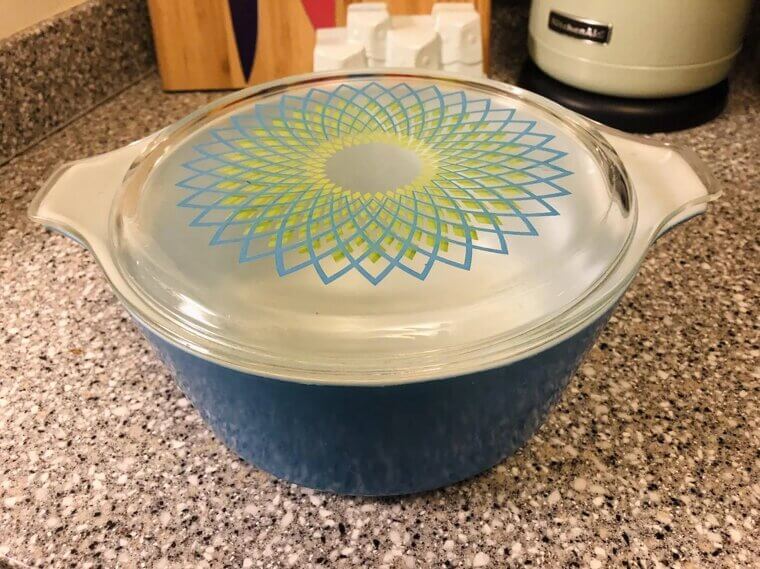
Because of its large fanbase, tt reportedly sells for up to $400 to $500 in top condition.
The "Royal Wheat" Gold-Leaf Lidded Divided Dish
Released in 1961 as a promotional item, Royal Wheat is the fancy cousin of the "Early American" pattern. It features a large, central stalk of wheat in 22-karat gold leaf on the glass lid of a divided casserole dish. Because this gold was applied over the glass, it is notoriously easy to scrub off. A dish with a "bright and shiny" lid is a prize.
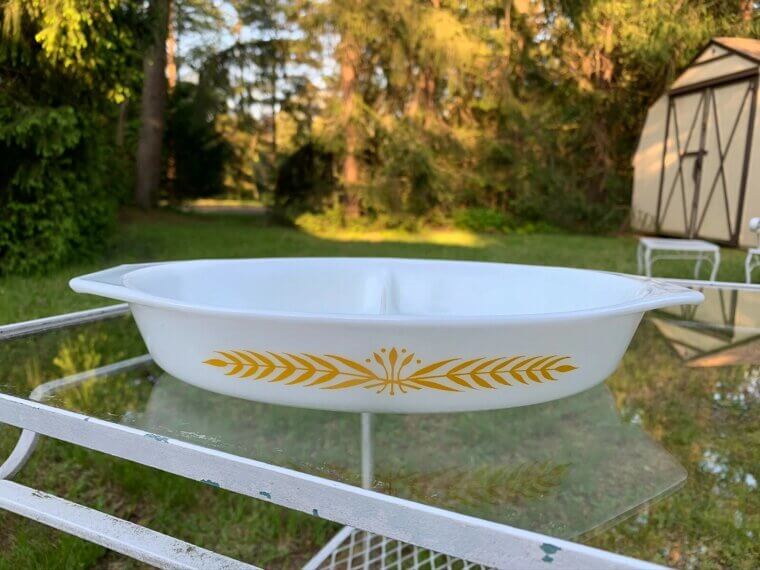
It’s a perfect example of how "fancy" kitchenware from the 60s has become a status symbol for modern collectors. These sets can fetch $150 to $200 at specialty auctions.
The "Fire-King Turquoise Blue" Delphite Beauty
While everyone knows Jadeite, its blue sibling, "Delphite," is equally stunning. This opaque, sky-blue glass was produced by Anchor Hocking in the late 1940s and 50s. The "Blue Mosaic" or "Turquoise" mixing bowls are particularly valuable because they weren't produced in the same massive quantities as the green versions. A set of nesting bowls in this calming blue hue can sell for $300 to $500.
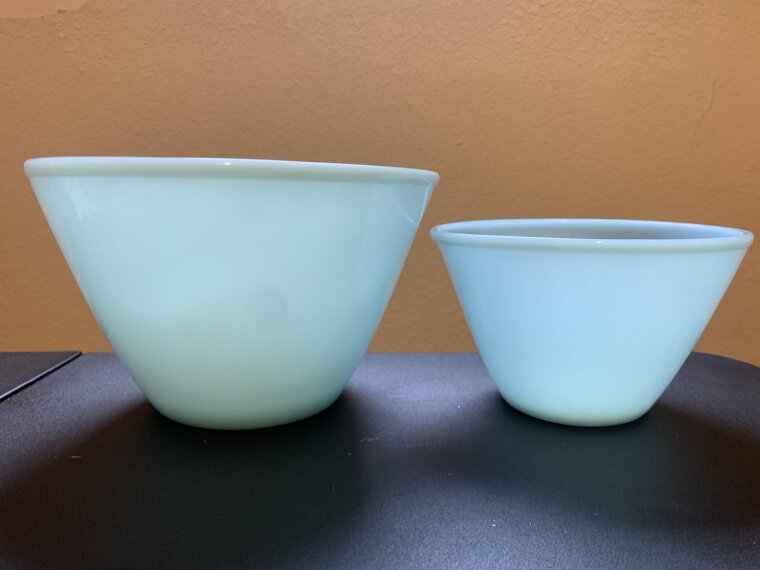
It’s a favorite for those who want a "coastal" or "shabby chic" look in their kitchen, and the color remains vibrant even after decades of use.
The "Floral Bouquet" CorningWare With the Rare Yellow Trim
We all know the blue flowers, but have you seen the "Floral Bouquet" with the yellow and blue outlines? Produced briefly between 1971 and 1975, this pattern was much more "mod" and artistic than the traditional cornflower. Because it was only available for four years, it is far less common. Some rare "Third Generation" versions of this pattern have reportedly sold for thousands of dollars to high-end collectors.
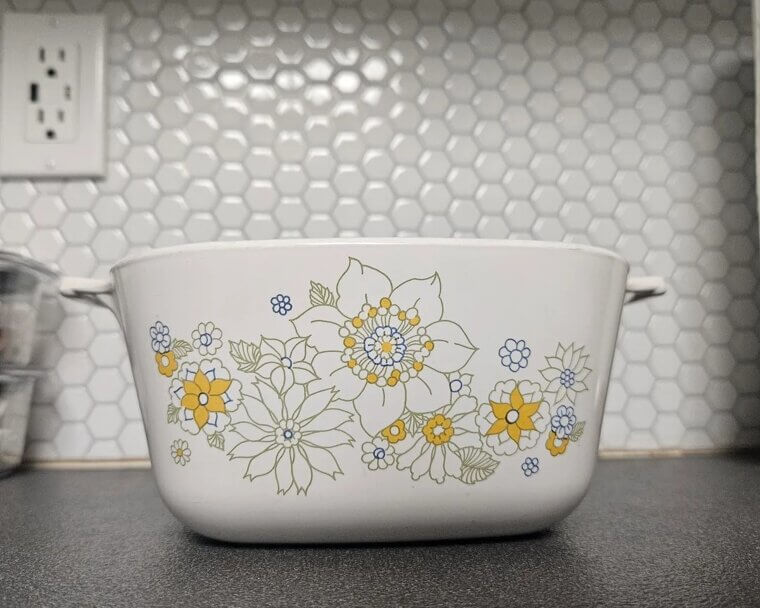
If you have a square casserole dish with these colorful, outlined blooms, you might be looking at one of the most valuable pieces of CorningWare in existence.
The "Gourmet" Gold on Delphite Blue Casserole
In 1960, Pyrex released a stunning promotional piece called the "Gourmet" casserole. It featured an intricate gold floral design printed over a rare Delphite (light blue) opal glass base. This combination of gold and blue is extremely rare in the Pyrex catalog. Because it was marketed as a high-end serving piece, many were kept in display cabinets and survived in excellent condition. A complete set with the original lid and gold-tone cradle sells for a heft amount.
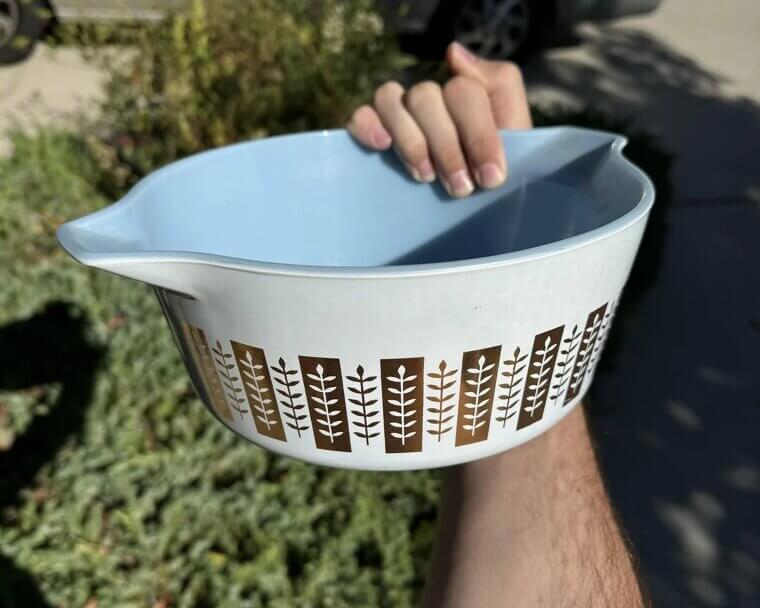
The complete set can reportedly sell for up to $400. It’s a true "showstopper" piece that highlights the elegance of mid-century entertaining.
The "Wildflower" CorningWare for the Nature Lover
Released in 1977, the "Wildflower" pattern features a bright, cheerful mix of orange poppies, yellow daisies, and blue cornflowers. It was designed to compete with the growing popularity of stoneware and "earthy" designs. While it was common in the late 70s, many pieces were used heavily and suffered from staining. A pristine, glossy set with no "burn marks" on the bottom is a hot commodity. Complete sets of these casseroles can sell for $150 to $300.
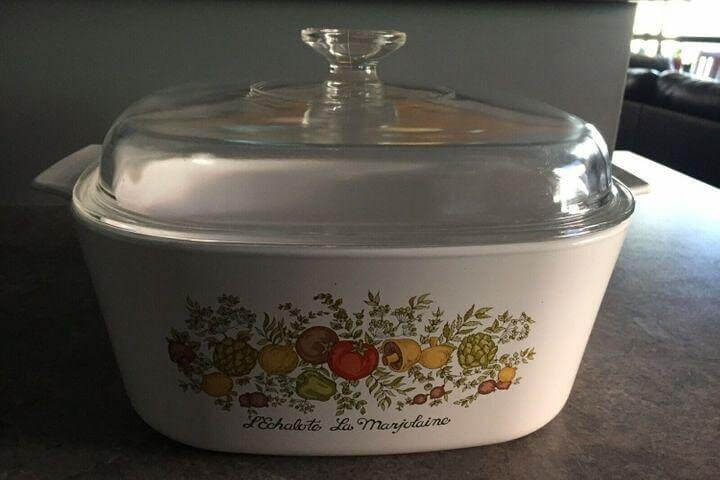
It’s a nostalgic favorite for anyone who grew up in a "sunflower and poppy" decorated kitchen, so it's worth it to dig through your cabinets or basement and see if you have one.
The "Primary Colors" Set That Started It All
This is the set that most people remember from their childhood: one yellow, one green, one red, and one blue bowl. Released in 1945, this was the very first set of Pyrex nesting bowls made from opal glass. While millions were made, finding a set where the red bowl hasn't turned "orange" or the blue bowl hasn't been scratched by a metal mixer is a challenge. A "Mint" set of these original 400-series bowls can sell for $200 to $400.
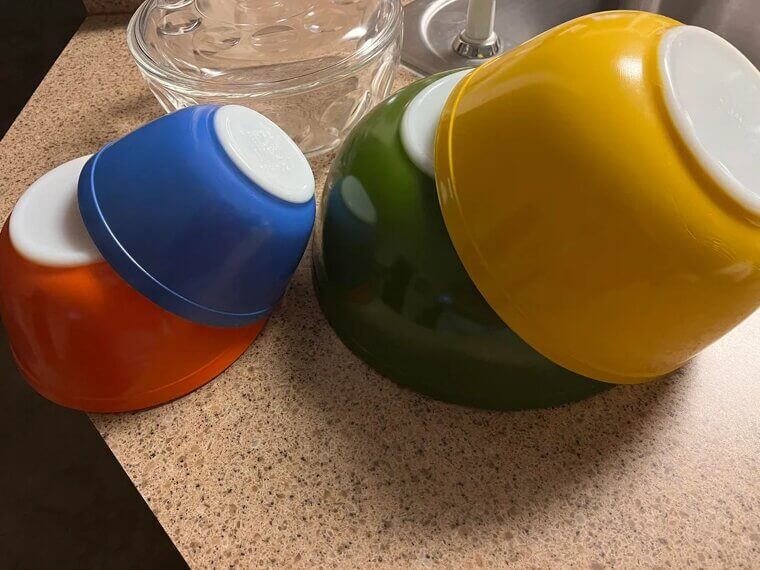
They are the foundation of any Pyrex collection and are arguably the most iconic kitchenware ever made.
The "Kimberly" Fire-King Mugs in Diamond Patterns
These textured mugs, featuring a diamond-grid pattern and a "faded" color look, were a staple of the 1970s. They came in colors like orange-to-yellow, green-to-blue, and a rare brown. While they were once considered "cheap" mugs, they are now highly collectible for their tactile, retro feel. A complete set of four mugs in vibrant, unfaded colors can fetch $60 to $100. They are the perfect "everyday" collectible.
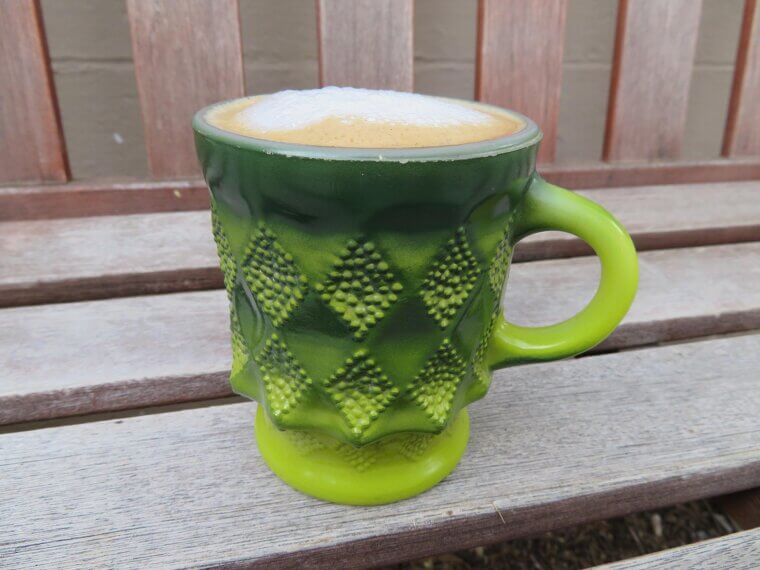
You can still use them for your morning coffee while knowing they are slowly increasing in value every year.
The "Spice O' Life" CorningWare With French Labels
You probably recognize the vegetables, but look closer at the text. The "Spice O' Life" pattern (1972-1987) features herbs like "L'Echalote" and "La Marjolaine." While the standard pieces are common, certain rare sizes—like the massive 5-quart pots or the tiny "grab-it" bowls with specific rare lids—are worth much more. A complete, mint-condition collection can sell for several hundred dollars. Collectors often look for the "P-series" markings on the bottom.
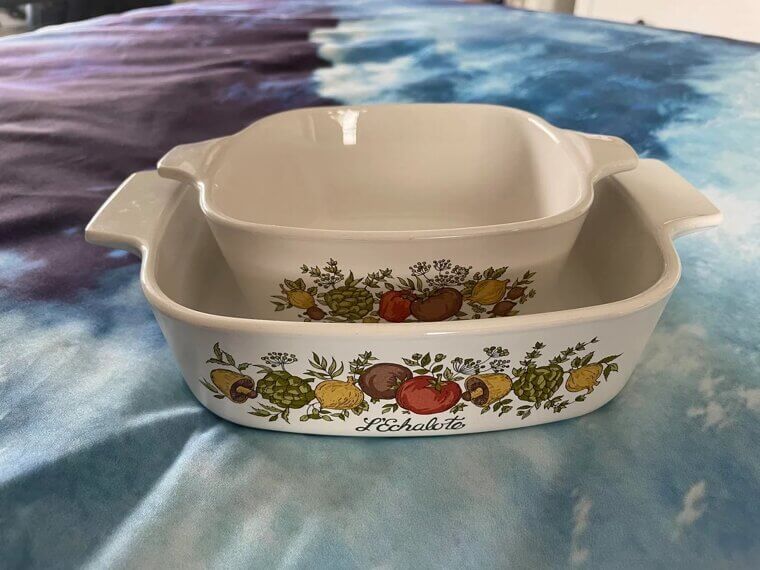
These markings indicate the older, higher-quality ceramic material that is no longer used today.
The "Pink Flamingo" Pyrex That Glows Under the Lights
Before "Pink Daisy," there was "Pink Flamingo." This solid pink line from the early 1950s is famous for its saturated, bubblegum-pink color. Because it doesn't have a printed pattern, any scratches or dullness are immediately visible. Finding a "glossy" pink pie plate or cake dish is a major win for collectors of all things pastel. A single round cake dish in excellent condition can reportedly sell for $100.
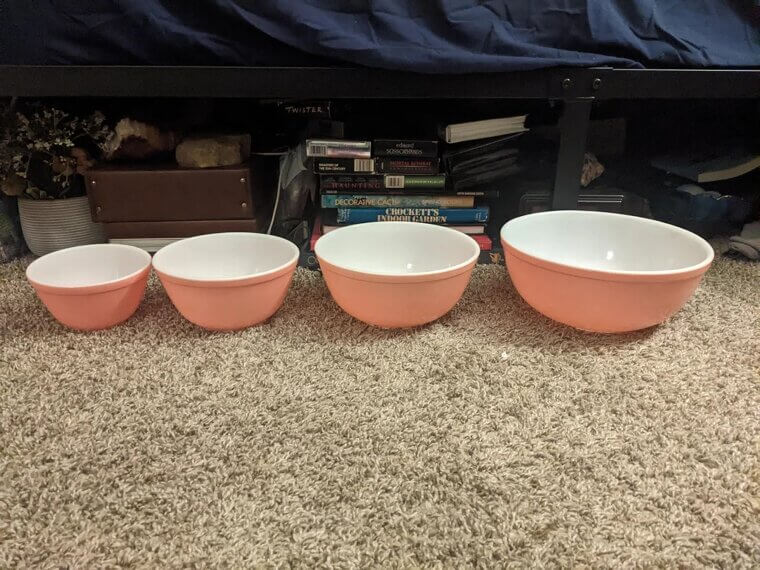
It’s the ultimate "retro dollhouse" kitchenware and remains one of the most popular colors in the entire vintage Pyrex catalog.
The "Blue Mosaic" Snack Set for Elegant Entertaining
Snack sets—consisting of a small plate with a circular indent for a matching teacup—were the "must-have" for bridge clubs and social gatherings in the 1960s. The "Blue Mosaic" pattern by Fire-King is particularly sought after for its delicate, geometric blue tiles. While they were once given away at grocery stores, a complete set for eight people in the original box can now sell for $150 to $200.
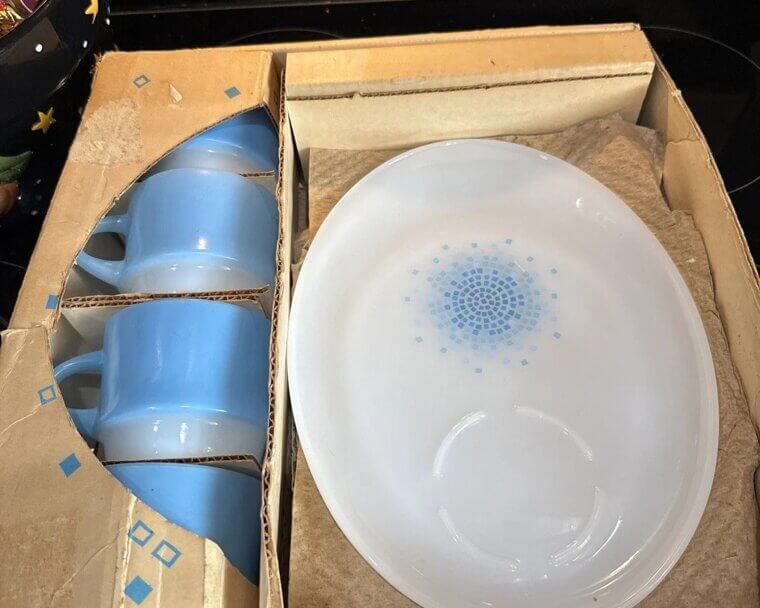
They are a charming reminder of a time when "afternoon tea" was a daily ritual rather than a special occasion.
The "Moon Deco" or "Crescent" Promotional Casserole
This 1960 promotional piece is a true rarity. It features a sleek, minimalist design of black and gold crescent moons and stars on a white background. It looks more like something you'd find in a high-end art gallery than a kitchen cabinet. Because it was a limited holiday release, it is incredibly difficult to find today. Collectors have reportedly paid upwards of $500 for a lidded version in top condition.
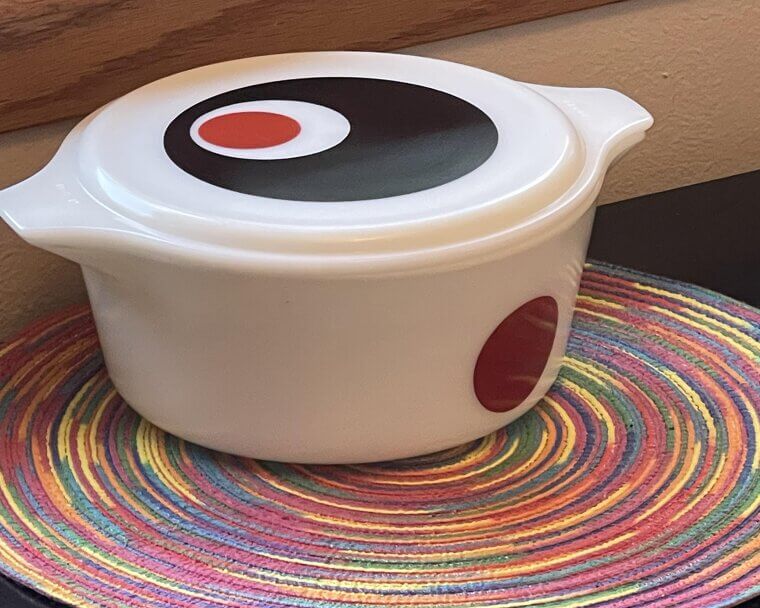
It’s a "holy grail" for those who love the "Atomic Age" aesthetic and want their kitchenware to reflect that cool, mid-century vibe.
The "Verde" Olive Green Square Casseroles
"Verde" was the king of the kitchen in the late 60s and early 70s. Featuring various shades of avocado and olive green, it perfectly matched the appliances of the era. The most valuable pieces are the square "Hostess" bowls and the "refrigerator" sets with the clear glass lids. While green might not be everyone's favorite color, the sheer nostalgia of the "Avocado Green" era has made these pieces highly collectible.
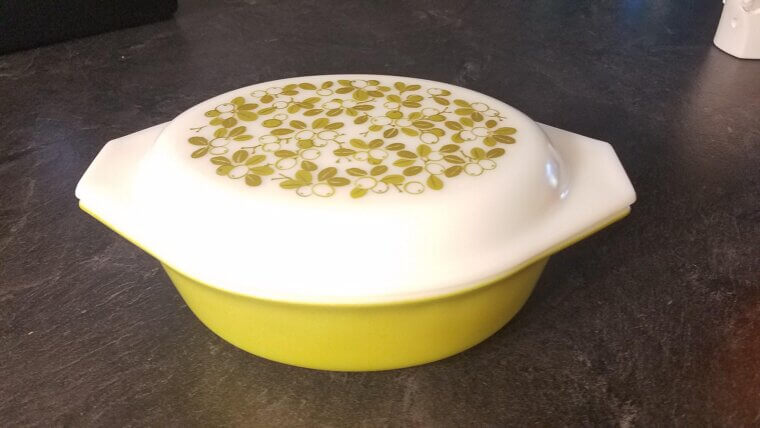
A full set of four refrigerator dishes in the Verde colors can sell for $150 to $250.
The "Horizon Blue" Pattern Inspired by the Moon Landing
Released in 1969 to celebrate the Apollo 11 moon landing, "Horizon Blue" features a mix of soft blue flowers and geometric shapes. The color was specifically chosen to evoke the "pale blue dot" of Earth as seen from space. Because of its historical connection, it holds a special place in the hearts of collectors. A full set of nesting bowls or the large "Cinderella" mixing bowls can bring in $200 to $300.
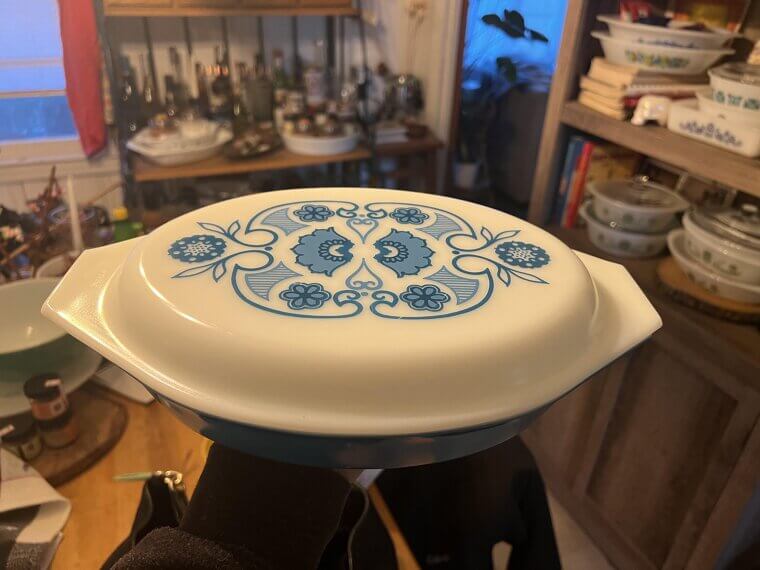
It’s a beautiful piece of history that you can actually use to mix up a batch of brownies!
The "Griswold Spider" Skillet for the Ultimate Collector
If you see a cast-iron skillet with a large, stylized spider emblem on the bottom, don't scream—rejoice! This is one of the rarest logos in the world of antique cookware. Produced for a very short time by Griswold, the "Spider Skillet" is the stuff of legends. One of these pans reportedly sold on eBay for a staggering $8,000. Most were melted down or lost to time.
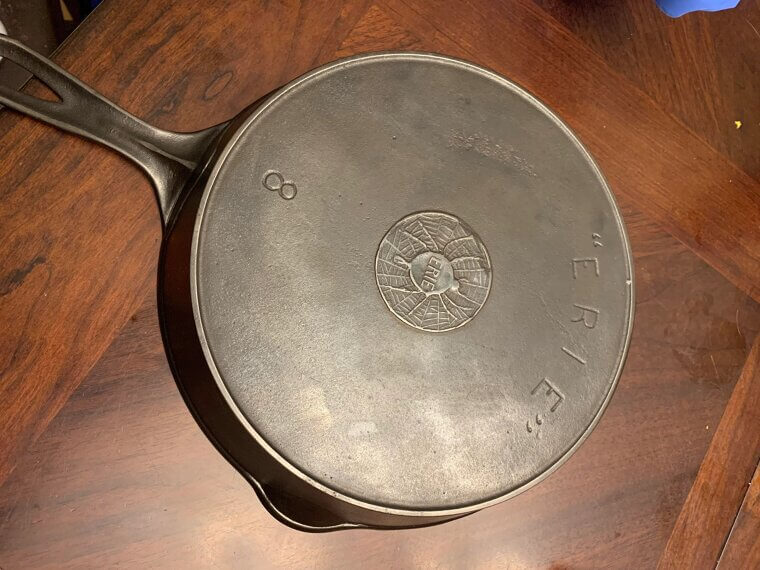
So finding one in a basement or barn is like finding a chest of buried treasure. It is the absolute pinnacle of cast-iron collecting.
The "Butterprint" Pink and White Rare Variant
You know the turquoise Amish pattern, but did you know it also came in pink? The "Pink Butterprint" was a promotional version that is significantly rarer than the standard blue. It features the same farming couple and roosters but in a gorgeous pastel pink. Because it was produced in much smaller numbers, a single mixing bowl can sell for $500, and a full set of four has reportedly fetched over $2,000.
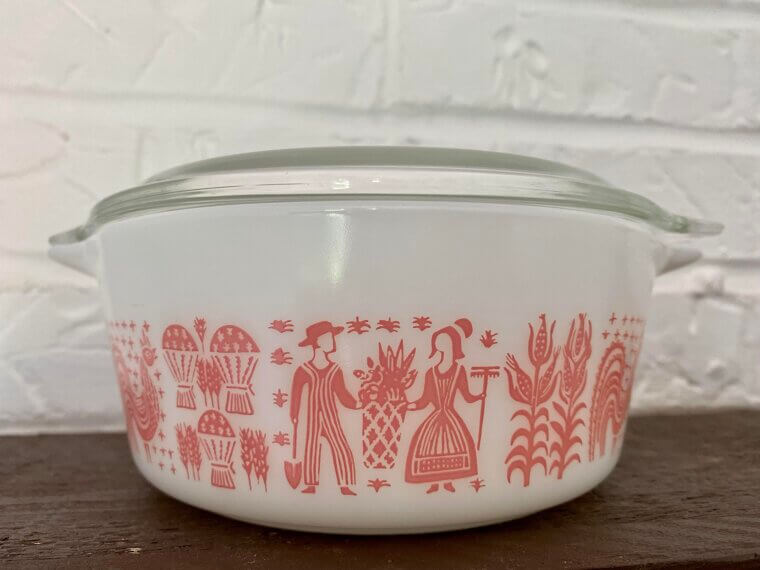
If you see this pattern in any color other than turquoise, take a closer look—you might have found a rarity.
The "Medallion" 1957 Turquoise Promotional Piece
Finally, we have the "Lace Medallion" or "Turquoise Medallion" from 1957. This large oval casserole features a delicate, lace-like white pattern on a bright turquoise base. It was one of the very first "promotional" items Pyrex ever made to see if people would buy decorated dishes. It was a massive hit then, and it’s even bigger now. A complete set with the original glass lid can sell for $300 to $500.
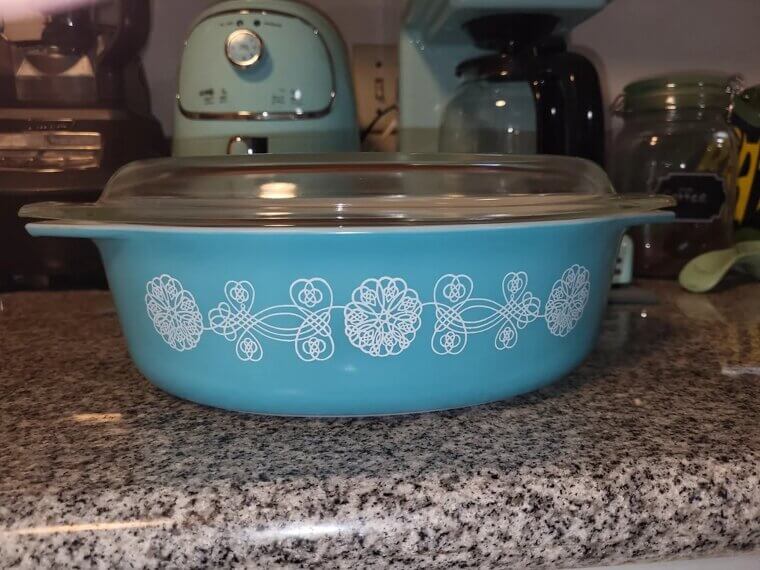
It’s the perfect bookend to our list, representing the birth of the "designer" kitchenware craze that still has us checking our cupboards today!